Talanta Stadium 94% Complete — But Kenyan MPs Demand Answers on Roads, Hospitals and Crowd Safety Ahead of AFCON 2027
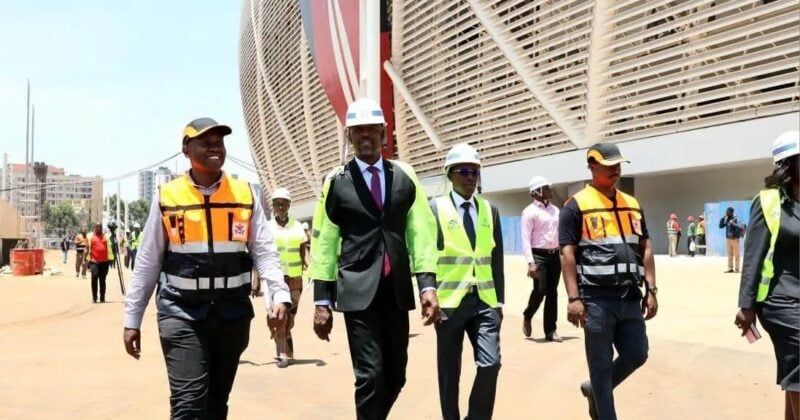
The countdown to AFCON 2027 is well underway, and Nairobi’s new Raila Odinga Talanta Stadium is nearly there — 94% complete overall, with the main stadium itself at 95%. But a parliamentary inspection this week made clear that a finished stadium is only part of the picture.
The numbers behind the build
Kenya’s National Assembly Sports and Culture Committee toured the 60,000-seater venue on Thursday, with the Ministry of Defence-led project confirmed on track to meet CAF’s 31 December deadline. Outdoor training facilities sit at 92% complete, external works at 93%. On paper, Talanta looks set to be ready in time.
But MPs want more than a finished stadium
The real tension in the session wasn’t about the build itself — it was about everything around it. MPs pressed hard on crowd management, with concerns raised over how roads serving the stadium will cope with thousands of fans arriving and leaving at once, and whether nearby hospitals are properly equipped for tournament-level emergencies. Water supply, CAF compliance for training grounds, and even the long-term tourism legacy of hosting AFCON all came under the microscope — with MPs pushing for the tournament to leave something behind, not just happen and pass.
Committee chairman Daniel Wanyama didn’t mince words, demanding a full report laying out exactly what CAF still requires and how much of it has actually been addressed.
A ballooning budget
The project’s cost has also jumped significantly — from an initial Sh35 billion to Sh45.8 billion, attributed largely to taxes and implementation costs. A reminder that major infrastructure projects like this rarely land where they start.
The answers so far
Officials did come with some reassurance. Sports Kenya Director-General Timothy Kilimo confirmed road works serving the stadium are already underway, targeting completion in April, with seven designated drop-off points and a new railway terminus being built alongside the stadium to help ease the crowd-flow concerns MPs raised.
On the medical side, project architect Victor King’e detailed a genuinely robust setup — medical centres on every floor, with a larger ground-floor facility built to handle emergencies and anti-doping procedures. Water security has also been heavily planned for, with a one-million-litre auxiliary tank, two 60,000-litre backup tanks, and two boreholes supplementing the main supply — insurance against the kind of high-demand strain a 60,000-capacity crowd can put on a venue.
Where else the tournament will be played
Talanta will share main-venue duties with the Moi International Sports Centre, Kasarani — which the Committee is set to inspect next. Training venues earmarked include Ulinzi Sports Complex, Nyayo National Stadium, Police Sacco Stadium, and additional facilities at both Kasarani and Talanta itself, while Kirigiti Stadium and Utalii Sports Grounds will host referee training.
A question mark beyond the concrete
Perhaps the most pointed question of the session came from MP Caroli Omondi, who raised concerns over whether internal disputes within the Football Kenya Federation (FKF) could pose a threat to the tournament’s preparations — a reminder that stadium readiness isn’t the only thing that could derail Kenya’s hosting plans.
On a lighter note: 210 hotels have already applied to host teams and officials during the tournament, all meeting required standards — meaning Kenya’s accommodation capacity isn’t the concern here; selecting among the applicants will be.
With the clock ticking toward June 2027, can Kenya turn a near-finished stadium into a genuinely ready tournament — roads, hospitals, water and football politics included?