Tinubu Orders Nigerian Football Reforms After NFF Leadership Shake-Up
Nigeria’s football administration is facing a major reset after President Bola Tinubu ordered comprehensive reforms following the resignation of Nigeria Football Federation (NFF) president Ibrahim Gusau and several other senior officials.
The directive, announced on Thursday by presidential spokesperson Bayo Onanuga, comes at a turbulent time for Nigerian football, with concerns over governance, administration and the development of the game dominating the conversation.
Gusau confirmed his resignation at a press conference in Abuja, while the NFF subsequently announced the departure of General Secretary Mohammed Sanusi and members of the federation’s Executive Committee.
Tinubu said the leadership changes should provide an opportunity to address what he described as longstanding structural weaknesses within Nigerian football.
“The reform must respond to a longstanding need to strengthen governance, administration, stakeholder representation, development pathways, domestic competitions and accountability across Nigerian football.”
The President has instructed the Chairman of the National Sports Commission (NSC) to work with the NFF Secretariat and key football stakeholders to maintain essential operations while a wider reform process takes place.
The process is expected to involve consultations with FIFA and CAF to ensure that any changes remain consistent with Nigeria’s international football obligations.
Results expose deeper problems
Tinubu’s intervention follows a difficult period for the country’s national teams.
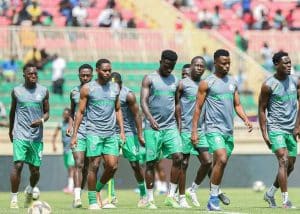
The Super Eagles failed to qualify for the 2026 FIFA World Cup despite Africa receiving an expanded allocation of 10 places. Nigeria had also missed the 2022 World Cup.
The situation worsened this month when the Super Falcons failed to qualify for the 2027 FIFA Women’s World Cup, ending their record of appearing at every edition of the tournament since its inception in 1991.
Tinubu believes football has failed to benefit sufficiently from the broader changes taking place within Nigeria’s sports administration.
“Football, Nigeria’s most popular sport and the greatest beneficiary of public support, investment and national attention, has continued to struggle basically due to structural deficits within the system,” he said.
What happens to the NFF?
Gusau’s resignation comes just 34 days before the end of his four-year term. He was elected NFF president on September 30, 2022, succeeding Amaju Pinnick after defeating Peterside Idah in the decisive round of voting.
The leadership crisis also comes shortly before the NFF’s elective congress, scheduled for September 27 in Lafia, Nasarawa State.
It remains to be seen how the proposed reforms will affect that electoral process.
For now, the government has stressed the need for continuity while a broader consultation takes place. The immediate priority will be keeping national-team programmes and domestic competitions running while determining how Nigerian football should be governed going forward.
Tinubu has called on football stakeholders to support the transition and work towards creating a more transparent, accountable and effective football system.
For a country with Nigeria’s football history, the challenge now is to turn the latest leadership crisis into an opportunity for genuine institutional change rather than another short-term restructuring.